Wind Load Resistance Rating of Aluminum Windows: A Comprehensive Guide
Introduction
Wind load resistance is one of the most critical performance indicators for aluminum windows, directly affecting building safety, occupant security, and long-term durability. This guide provides a comprehensive overview of wind load resistance ratings, testing standards, influencing factors, and selection guidelines for aluminum window systems.
________________________________________
1. What is Wind Load Resistance?
Definition
Wind load resistance refers to the ability of windows and doors to withstand wind forces acting perpendicular to their surface while maintaining normal functionality, without excessive deformation, structural damage, or failure.
Why It Matters
• Safety: Prevents window failure during severe weather events (typhoons, hurricanes, strong winds)
• Structural Integrity: Protects against frame bending, glass breakage, and sash detachment
• Weather Performance: Maintains water tightness and air tightness under wind pressure
• Longevity: Reduces fatigue and wear from repeated wind loading over decades
• Code Compliance: Meets mandatory building code requirements for different regions and heights
________________________________________
2. Chinese National Standard Classification (GB/T System)
Standard References
• GB/T 7106-2019: Test methods for air permeability, watertightness, and wind load resistance of building external windows and doors
• GB/T 31433-2015: General technical requirements for building curtain walls, windows and doors
• GB/T 8478-2020: Aluminum alloy doors and windows
Classification System
Wind load resistance is classified into 9 grades based on the P3 value (classification test pressure difference), measured in kilopascals (kPa). Higher grades indicate greater wind resistance capability.
Grade P3 Value Range (kPa) Wind Speed Reference Typical Building Application
Grade 1 1.0 ≤ P3 < 1.5 ~80 km/h Low-rise buildings (1-3 floors), sheltered inland areas
Grade 2 1.5 ≤ P3 < 2.0 ~100 km/h Low-rise residential, interior courtyards
Grade 3 2.0 ≤ P3 < 2.5 ~115 km/h 3-6 story buildings, general urban areas
Grade 4 2.5 ≤ P3 < 3.0 ~130 km/h 6-10 story buildings, mid-rise commercial
Grade 5 3.0 ≤ P3 < 3.5 ~145 km/h 10-20 story buildings, moderately windy areas
Grade 6 3.5 ≤ P3 < 4.0 ~160 km/h 20-30 story buildings, coastal regions
Grade 7 4.0 ≤ P3 < 4.5 ~175 km/h 30-50 story buildings, high wind zones
Grade 8 4.5 ≤ P3 < 5.0 ~190 km/h 50+ story buildings, typhoon-prone coastal areas
Grade 9 P3 ≥ 5.0 ~200+ km/h Super high-rise buildings, extreme wind/typhoon zones
Note: Grade 6 and above require specific test pressure values to be indicated in the classification.
________________________________________
3. Testing Methodology: P1, P2, and P3
Wind load resistance testing involves three distinct pressure levels, each evaluating different aspects of window performance.
P1 - Deflection Test (Serviceability Limit)
• Purpose: Measures the maximum deflection (bending) of structural members under design wind pressure
• Test Procedure:
o Pressure is gradually increased at 100 Pa/s to the specified P1 level
o Pressure is maintained for 30 seconds
o Maximum deflection of the main stressed members is recorded
o Pressure is released and residual deformation is measured after 60 seconds
• Acceptance Criteria:
o Maximum relative deflection ≤ L/150 (where L = span length)
o No permanent damage or functional impairment after pressure release
• Relationship: P1 represents the serviceability pressure; P3 = 1.5 × P1
P2 - Repeated Pressure Test (Fatigue Resistance)
• Purpose: Evaluates performance under repeated wind gusts and fluctuating loads
• Test Procedure:
o 50 cycles of pulsating pressure at the P2 level
o Each cycle includes pressure rise, hold, and release
o Simulates real-world wind gust conditions
• Acceptance Criteria:
o No hardware failure
o No seal damage
o No permanent deformation affecting operation
• Relationship: P2 = 0.5 × P1
P3 - Safety Test (Ultimate Load Resistance)
• Purpose: Verifies structural safety under extreme wind conditions
• Test Procedure:
o Pressure is increased to P3 level (1.5 × P1)
o Tests both positive pressure (wind pushing inward) and negative pressure (suction pulling outward)
o Negative pressure is often more critical as it can pull sashes outward
• Acceptance Criteria:
o No glass breakage
o No sash detachment from frame
o No structural failure of any component
o No dangerous debris generation
• Significance: P3 is the classification value used for rating windows
Testing Direction
Both positive pressure (wind blowing toward the window) and negative pressure (wind suction pulling the window outward) are tested. Negative pressure is typically more challenging for windows, especially for operable sashes.
________________________________________
4. Key Factors Affecting Wind Load Resistance
4.1 Profile Wall Thickness
• Direct Impact: Thicker profiles provide greater structural rigidity
• Standard Requirements:
o Exterior windows: Minimum 1.8mm (GB/T 8478-2020)
o High-rise buildings: Recommended 2.0-2.5mm
o Extreme wind zones: 2.5mm or thicker
• Principle: Thicker walls resist bending and torsion under wind loads
4.2 Profile Series (Frame Width)
• Wider Profiles: Larger cross-sectional dimensions increase moment of inertia
• Common Series: 60, 70, 80, 90, 108, 110, 120 series
• Selection Guide:
o Small windows (<1m): 60-70 series
o Standard windows (1-1.5m): 70-90 series
o Large windows/floor-to-ceiling: 90-120 series
• Note: Profile width must be appropriate for window size and wind load
4.3 Glass Specification
• Glass Thickness: Thicker glass resists wind pressure better
o 5mm: Small windows (<1m²)
o 6mm: Standard windows (1-2m²)
o 8mm+: Large windows or high wind areas
• Glass Type:
o Tempered glass: 3-5x stronger than annealed glass, safer when broken
o Laminated glass: Better impact resistance, retains integrity when broken
o Insulating glass (IGU) : Multiple layers provide combined strength
• Glass Area: Larger glass panels experience higher total wind forces
4.4 Hardware Components
• Hinges: Must withstand both vertical load and horizontal wind forces
o Friction stays: Number and size directly affect wind resistance
o Heavy-duty hinges: Required for large, heavy sashes
• Locks: Multi-point locking systems distribute wind loads better
o Single-point lock: Basic, suitable for small windows
o Two-point lock: Standard for most residential windows
o Multi-point (3+) : Required for high wind resistance ratings
• Quality: Premium hardware maintains performance over decades of use
4.5 Window Size and Aspect Ratio
• Larger Windows: Experience higher total wind forces and require stronger framing
• Aspect Ratio: Tall, narrow windows behave differently than wide, short ones
• Maximum Sash Size: Each window system has tested maximum dimensions per wind rating
4.6 Mullion and Transom Reinforcement
• Mullions: Vertical dividers between window units must resist wind bending
• Transoms: Horizontal dividers carry wind loads from upper panels
• Reinforcement: Steel or aluminum inserts strengthen critical structural members
• Design: Properly engineered mullion profiles are essential for multi-panel windows
4.7 Frame-to-Wall Connection
• Installation Method: Anchoring strength affects overall wind performance
• Anchor Points: Spacing and type of fasteners must meet engineering requirements
• Opening Preparation: Wall opening must be structurally adequate to transfer wind loads
________________________________________
5. International Standards Comparison
European Standards
• EN 12210: Windows and doors - Wind load resistance - Classification
• EN 12211: Windows and doors - Wind load resistance - Test method
• Classification: Classes 1-5 (plus special classes) based on pressure resistance
• Key Difference: European standards use different deflection limits (L/200 typical)
American Standards
• ASTM E330: Standard Test Method for Structural Performance of Exterior Windows, Curtain Walls, and Doors by Uniform Static Air Pressure Difference
• AAMA/WDMA/CSA 101/I.S.2/A440: North American window performance standard
• Performance Grades (PG): Rated by design pressure (e.g., PG30, PG40, PG50)
• Deflection Limit: L/175 for most applications
ISO Standard
• ISO 6612:2023: Windows and doors - Resistance to wind load - Test method
• Harmonized: Aligns with European standards for international acceptance
Australian/New Zealand Standards
• AS/NZS 2047: Windows in buildings - Selection and installation
• Wind Classification: Based on region and terrain (N1, N2, N3, N4, C1-C4)
________________________________________
6. Selection Guidelines by Application
6.1 By Building Height
Low-Rise (1-3 stories)
• Required Grade: 1-3 (P3: 1.0-2.5 kPa)
• Profile: 60-70 series, 1.4-1.8mm wall thickness
• Hardware: Standard hinges, single or two-point locking
• Glass: 5mm tempered or insulating glass
• Typical: Residential homes, townhouses, garden apartments
Mid-Rise (4-15 stories)
• Required Grade: 3-5 (P3: 2.0-3.5 kPa)
• Profile: 70-90 series, 1.8-2.0mm wall thickness
• Hardware: Heavy-duty hinges, multi-point locking
• Glass: 5-6mm insulating glass, tempered
• Typical: Apartment buildings, office buildings, hotels
High-Rise (15-30 stories)
• Required Grade: 5-7 (P3: 3.0-4.5 kPa)
• Profile: 90-110 series, 2.0-2.5mm wall thickness
• Hardware: Premium heavy-duty, multi-point locking system
• Glass: 6-8mm tempered insulating glass
• Typical: Commercial towers, high-rise residences, urban buildings
Super High-Rise (30+ stories)
• Required Grade: 7-9 (P3: 4.0-5.0+ kPa)
• Profile: 110+ series, 2.5mm+ wall thickness
• Hardware: Engineered heavy-duty systems, tested for high loads
• Glass: 8mm+ laminated or tempered, possibly laminated insulating glass
• Typical: Skyscrapers, landmark buildings, coastal towers
6.2 By Geographic Location
Inland Areas (Low Wind)
• Required Grade: 2-4
• Focus: Basic structural adequacy, cost efficiency
• Consideration: Local building code minimums
Coastal Areas (Moderate Wind)
• Required Grade: 4-6
• Additional: Corrosion-resistant hardware, marine-grade coating
• Consideration: Salt spray resistance as important as wind load
Typhoon/Hurricane Zones (Extreme Wind)
• Required Grade: 6-9
• Additional: Impact-resistant glass, reinforced framing
• Consideration: Must meet local hurricane building codes
• Critical: Negative pressure (suction) resistance is paramount
6.3 By Window Type
Fixed Windows
• Best wind resistance (no operable sash to worry about)
• Can achieve highest grades with proper framing
• Suitable for high-rise curtain wall applications
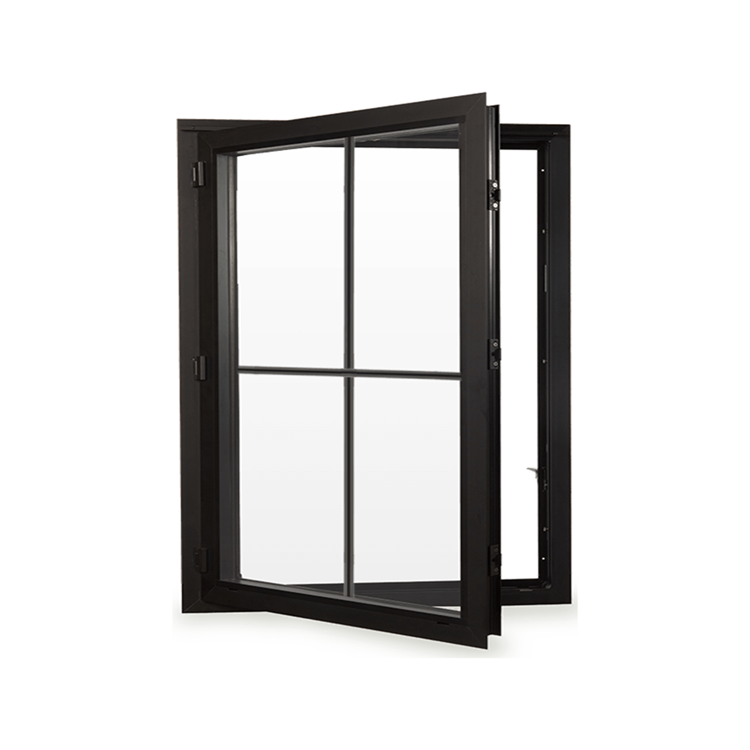
Casement Windows
• Good wind resistance when properly locked
• Multi-point locking essential for high ratings
• Hinges must resist both vertical and horizontal loads
Sliding Windows
• Generally lower wind resistance than casement
• Sash can be pushed outward by negative pressure
• Require anti-lift devices and proper track design
Tilt & Turn Windows
• Good wind resistance in closed position
• Multi-point locking system standard
• European designs often achieve high ratings
________________________________________
7. Verification and Quality Assurance
Test Certifications
• Third-Party Testing: Always verify claims with accredited lab test reports
• Key Documents:
o Wind load resistance test report (GB/T 7106 or equivalent)
o System performance certification
o Material quality certificates
• Watch For: Some suppliers claim high ratings without actual testing
On-Site Verification
• Profile Thickness: Measure with caliper to verify stated thickness
• Hardware Quality: Check brand, weight, and construction of hinges and locks
• Glass Markings: Tempered glass should have permanent factory marks
• Installation: Verify proper anchoring and fastening per manufacturer specs
Common Misconceptions
• Myth: Higher series number = better wind resistance
o Fact: Profile design and wall thickness matter more than just width
• Myth: Thicker is always better
o Fact: Over-specification increases cost unnecessarily; match to actual requirements
• Myth: All aluminum windows have similar wind resistance
o Fact: Performance varies dramatically based on design, materials, and hardware
________________________________________
8. Engineering Calculation Basics
Wind Load Calculation
The required wind load resistance depends on:
1. Basic Wind Pressure (w₀): Local code value (e.g., 0.3-0.8 kPa across China)
2. Height Factor (μ_z): Wind speed increases with height
3. Shape Factor (μ_s): Building aerodynamics affect pressure distribution
4. Gust Factor (β_z): Accounts for wind turbulence
5. Importance Factor: Building occupancy and risk category
Simplified Formula
Practical Rule of Thumb
• 10-story building (~30m): Typically requires Grade 4+ (≥2.5 kPa)
• 30-story building (~100m): Typically requires Grade 6+ (≥3.5 kPa)
• 50-story building (~150m): Typically requires Grade 7-8 (4.0-4.5 kPa)
• Coastal typhoon zones: Add 1-2 grades to above recommendations
Important: Always consult a structural engineer for project-specific wind load calculations.
________________________________________
Conclusion
Wind load resistance is a fundamental safety parameter for aluminum windows that must be carefully matched to project requirements. The 9-grade Chinese classification system (Grades 1-9, P3: 1.0-5.0+ kPa) provides a clear framework for specifying appropriate window performance.
Key takeaways:
1. Safety First: Never specify below code-mandated minimum wind resistance
2. Right Size, Right Grade: Match window size and grade to actual wind loads
3. Verify Claims: Demand third-party test reports for performance claims
4. System Matters: Wind resistance depends on the entire system (profile, glass, hardware, installation), not just one component
5. Location Drives Requirements: Coastal and high-rise applications demand significantly higher wind ratings
By understanding wind load resistance ratings and selecting appropriate aluminum window systems, architects, builders, and homeowners can ensure safety, durability, and code compliance for any building project.
